
A warning that this story contains information which some readers may find upsetting.
Manx Care is to be asked to consider its approach to certain mental health referrals after a verdict of suicide was recorded at the inquest of a Laxey man who died last year.
Philip Ashley Cooper was found at his home address on 28 August; the 42-year-old had died of asphyxiation.
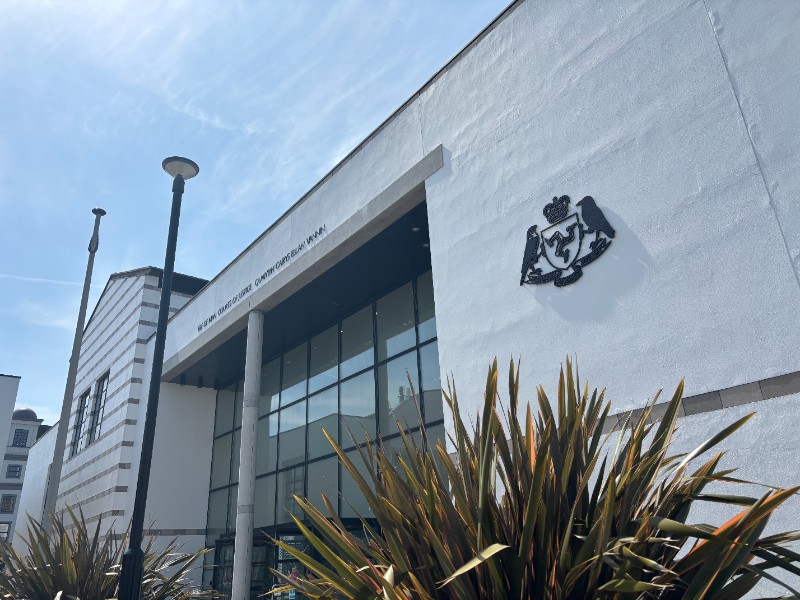
An inquest held at Douglas Courthouse last week heard testimony from his family, emergency services and representatives of the healthcare body.
The court heard that in the days and weeks before his death, Mr Cooper had been seeking support from medical professionals.
He had suffered from depression for a few years, and had a strong love for his dog, who he 'treated like his child'.
In the week before his own death, Mr Cooper's beloved pet had died, something he took 'very hard'.
The court heard he had been regularly in contact with his GP regarding his medication - a diazepam prescription of which he believed he required a higher dose.
Timeline
On the day before his death (Wednesday 27 August), Mr Cooper again connected with the Island's mental health services.
At 1:50pm, his mother called the Crisis Response and Home Treatment Team (CRHTT) with concerns for his welfare; she was told he would have to ring himself, which he did at 2:14pm.
He told the mental health nurse that he was highly concerned about his prescription, as he was out of medication and his dose wasn't going to be reassessed until after a planned appointment with other support services.
The nurse remained on the phone with him until he reached that appointment.
Mr Cooper met with a registered mental health nurse - who is also an accredited cognitive behavioural therapist - for a screening appointment at the Community Wellbeing Service (CWS).
The court heard this service is at step two on the stepped care model, meaning it targets mild to moderate instances of mental health disorders, such as anxiety and depression.
Its employees tend to see clients once a week for counselling.
The nurse described Mr Cooper as 'cooperative and polite' but said that she was 'concerned about the distress that he was showing'.
She told the court: "Usually people are not presenting in as much distress as Philip was. No human should be that distressed."
He told her: "I'm lost and anxiety is controlling my life", categorising what he was going through as a "complete breakdown".
He was also having suicidal thoughts which were fluctuating from day to day but could give her no details of any specific plans.
As a result, she said she 'knew very quickly' she'd need to refer him up a step, to the Community Mental Health Service for Adults (CMHSA), which provides more specialist and intensive help, from the likes of psychiatrists, mental health nurses, social workers, psychologists and occupational therapists - professionals who have the power to prescribe medication - as his case was 'above the criteria' that the CWS could offer.
The court heard she offered him reassurances that her referral would be accepted and stayed beyond her working hours that evening to ensure it would be completed in time for a referral meeting which is held at 11am on Thursdays.
She said Mr Cooper didn't appear to believe her reassurances and had doubts the CMHSA would help, particularly given the fact that he had had a previous referral to the service rejected two weeks earlier, on 13 August.
Crisis Response Team
Following his appointment, the nurse from the CWS contacted the Crisis Response Team to update them on the outcome of the appointment, and to refer Mr Cooper for support from them over the following week until he could be seen by the CMHSA.
The Crisis Response Team then updated Mr Cooper's GP, who upped his dosage of diazepam from 2mg to 5mg and texted him to inform him the prescription would be available the next day.
However, the Crisis Response Team rejected the overall request to provide support, as they deemed it unnecessary due to that dosage increase.
When the CWS nurse went into work the next day (28 August), she was 'surprised' to discover the Crisis Response Team referral hadn't been accepted.
At the 11am meeting, her referral to the CMHSA was.
But Mr Cooper took his own life that afternoon.
Recommendation
It is understood Mr Cooper would not have been aware of the rejection from the Crisis Response Team, nor was he aware that he’d received the text message from his GP.
Concluding proceedings, Coroner of Inquests James Brooks gave a verdict of suicide, saying he believed Mr Cooper had displayed ‘settled intent’ in taking his own life.
He also confirmed he intends to write a letter to Manx Care and the Department of Health and Social Care regarding the 'weight' placed on referrals given by mental health professionals to the Crisis Response Team.
He told the court it would be 'sensible' for Manx Care to assess how such referrals are considered.
Mr Cooper's family agreed to Mr Brooks' letter being published, along with Manx Care’s response on the courts’ website at a later date.
They said it would 'bring them comfort' to know a recommendation had been given, even in the form of a letter.
Expressing his condolences to Mr Cooper's family, Mr Brooks closed the inquest at Douglas Courthouse on Thursday 2 July.
If you've been impacted by anything in this article, there are organisations that can help. Visit our Support page HERE.
 Teen's self-defence claim challenged by prosecutor
 Workers' quick actions help contain battery fire
 Hockey: Fifth straight win for Bacchas in Premier League
 MHK hopes to bring windfarm discussion to next month's Tynwald sitting